No matter what you choose…
… cremation is simply a form of final disposition. It’s the other things you do that determine whether a final tribute is meaningful, healing, personalized, and exactly what your family needs to grieve.
Direct Cremation
- Preparation and transfer of the deceased
- Services of a funeral director
- Online obituary
- Options for cremated remains
Cremation with Memorial Service
- Preparation and transfer of the deceased
- Services of a funeral director
- Online obituary
- Options for cremated remains
- Gathering of friends and family
- Reception after service
Cremation with
Funeral Service
- Preparation and transfer of the deceased
- Services of a funeral director
- Online obituary
- Options for cremated remains
- Gathering of friends and family
- Reception after service
- Embalming and preparation of the body
- Viewing & ceremonial casket
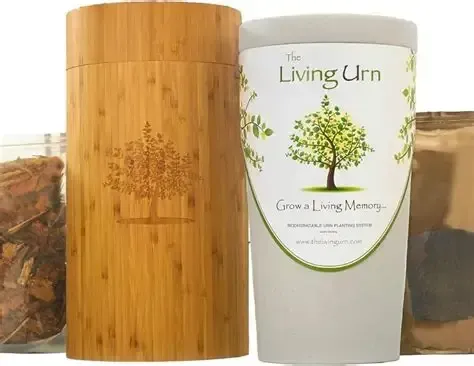
Grow a Living Memory ®
Spence Funeral Services is excited to offer a new eco-friendly option for memorializing a loved one with The Living Urn® - America's first Bio Urn and Planting System designed to grow a beautiful, enduring memory tree, plant or flowers with cremated remains. Honor a loved one when they pass on and celebrate and commemorate all they've given us - the joy, the companionship, the love - and keep their memory present in our lives!
Select a tree well-suited to your specific region from the many options (The Living Urn Tree Selection). A beautiful, enduring living memorial will then grow up from the urn to keep your loved one's memory present in your life!
Additional Customization:
Why is it important to have a meaningful, healing, and personalized funeral service?
Meaningful - When something has meaning, it has deeper purpose, deeper poignancy. By intentionally creating a meaningful service, you allow mourners - family, friends, neighbors - to say goodbye in a way that will help them heal and bring peace and comfort for years to come.
Healing - After the death of someone loved, you will experience feelings of grief. These emotions look different from person to person (sadness, anger, guilt, regret, shock, disbelief), but a meaningful service can help bring healing and comfort to a hurting heart.
Personalized - Above all, it’s essential to personalize a funeral service. Without personalization, you cannot create meaning or facilitate healing. Without personalization, you get a cookie-cutter experience instead of a one-of-a-kind final tribute.
Together, all three - meaningful, healing, and personalized - come together to create a truly unique funeral experience that will heal hurts, touch hearts, and help you say goodbye to a truly unique and irreplaceable person.
Cremation FAQs
What is cremation?
Cremation is the process of reducing the human body using high heat and flame. Cremation is not the final disposition of the remains, nor is it a type of funeral service.
Is a casket needed for the cremation process?
No, a casket is not required. Although some states require an alternative container constructed of wood or cardboard, other states have no requirements.
Can the body be viewed without embalming?
Yes, without embalming immediate family members only may view the deceased prior to cremation.
Can an urn be brought into the church?
Like the Roman Catholic Church, most Protestant Churches allow for the urn to be present during the memorial service. Similar to the body being present in a casket during a traditional funeral service, it is meaningful and appropriate for the cremated body to be present as part of a memorial service.
What can be done with the cremated remains?
While laws vary state by state, for the most part, remains can be buried in a cemetery lot or in a cremation garden, interred in a columbarium, kept at home, or scattered. When scattering, the funeral home can provide a scattering urn that assists is the process. It is a wooden container with a sliding door and allows for a controlled pour.
How can I be sure I receive the correct remains?
All reputable cremation providers have developed rigorous sets of operating policies and procedures in order to maximize the level of service and minimize the potential for human error. Additionally, since it is illegal to perform more than one cremation at a time, it is next to impossible to receive the incorrect remains.
How long does the actual cremation take?
It all depends on the weight of the individual. For an average-sized adult, cremation can take two to three hours at a normal operating temperature of 1,600 to 1,800 degrees Fahrenheit.
What do the cremated remains look like?
Cremated remains resemble coarse sand and are whitish to light grey in color. The remains of an average-sized adult usually weigh between seven and eight pounds, and typically do not exceed a volume of 200 cubic inches. Since cremated remains are majorly comprised of bone, the amount of cremated remains is more closely tied to the bone density and structure of the deceased than their overall size and weight.
Do I need an urn?
An urn is not required by law. Following cremation, the cremated remains are placed in a temporary plastic container. Families may desire an urn for a memorial service or to display at home. Although some cemeteries will inter the temporary plastic container, others require a durable urn or urn vault for ground burial.